

Invited Speakers
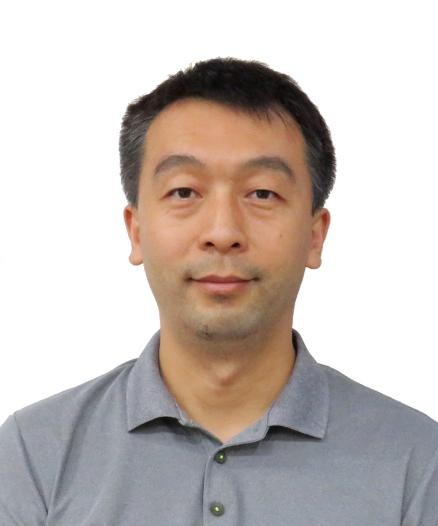
Prof. Li Cheng, University of Alberta, Canada
Speech Title: 3D Visual Character Motion Generation, Reconstruction, and Embodied Agents
Abstract: Recent advancements in sensing and deep learning have unlocked exciting possibilities for the visual analysis of human and animal motions in the physical 3D space. These innovations hold great potential for applications across diverse domains, including for example natural user interfaces, AR/VR, robotics, and gaming. In this talk, I will present the latest research progress in this rapidly evolving field including especially 3D human motion generation, pose tracking and shape reconstruction, and related tasks - highlighting key developments from the past few years as well as contributions from our own work.
Biography: Li CHENG is a full professor with the Department of Electrical and Computer Engineering, University of Alberta. He is currently an associate editor of IEEE Transactions on Image Processing. Prior to joining University of Alberta, he worked at A*STAR, Singapore, TTI-Chicago, USA, and NICTA, Australia. His current research interests include computer vision, multimedia data analytics, and applications. He has over 200 papers in peer-reviewed journals and conferences. His papers have been nominated for Best Paper Award at CVPR 2021. More recent details can be found at his lab website, https://vision-and-learning-lab-ualberta.github.io/.
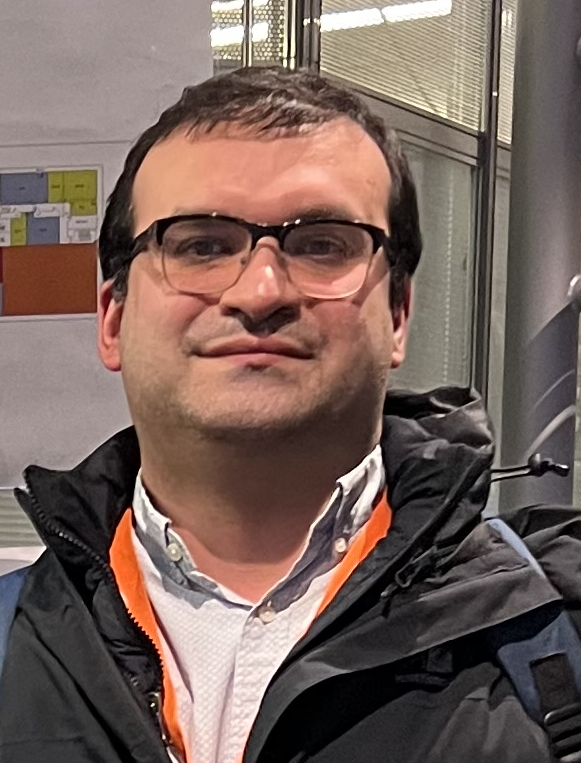
Dr. Mojtaba Ahmadieh Khanesar, University of Nottingham, UK
Speech Title: High Precision
Calibration, and Control of Industrial Robots using
Advanced Optical Metrology
Abstract: Joint-angle
encoders play a crucial role in achieving maximum motion
resolution in industrial robots, as their accuracy
directly affects overall performance and the uncertainties
in the robots' geometric parameters. To improve the motion
resolution of industrial robots, mechanical modifications
can be applied. Advanced optical metrology equipment
allows for enhanced precision by introducing a feedback
loop that measures the robot's Cartesian position in real
time. Laser trackers represent cutting-edge measurement
technology in three-dimensional space, utilising
principles of laser interferometry, multiple
high-precision encoders, and internal control loops to
deliver highly accurate measurements across a large
volume. The feedback obtained from the laser tracker is
used to control the industrial robot in real time.
Additionally, the robot's forward kinematic
Denavit–Hartenberg parameters are calibrated offline using
position measurements.
Biography: Dr. Mojtaba
Ahmadieh Khanesar (PhD, MIET’20, SMIEEE’16, MASME’23) is a
research fellow in optical metrology with machine learning
in the Department of Mechanical, Materials, and
Manufacturing Engineering at the University of Nottingham,
UK. With extensive international experience in Denmark,
Turkey, Iran, and the UK, his research spans metrology,
robotics, control systems, and machine learning. He earned
his PhD in Control Engineering from K. N. Toosi University
of Technology, Tehran, Iran. He has contributed
significantly to EPSRC-funded projects, including
Robodome, HARISOM, and Chattyfactories, and have
supervised two PhD and undergraduate students while
working at the University of Nottingham. His current
project is Robodome, working on multi-illumination system
for precise aerospace measurements. He serves as an
associate editor for Human-Centric Intelligent Systems,
Complex and Intelligent Systems, and Energies, and
contribute to special issues on robust control and
electromechanical systems. His research output includes
110 documents that have been cited more than 3000 times,
with an h-index of 25, reflecting his significant impact
in the field. He has received multiple honours, including
the Collaborate to Innovate Award, top student awards, and
top paper recognitions in IEEE conferences and Robotics
journals, and he maintains active memberships in IEEE,
ASME, IET, and BCS, demonstrating leadership and influence
in the engineering and computational intelligence
communities worldwide.